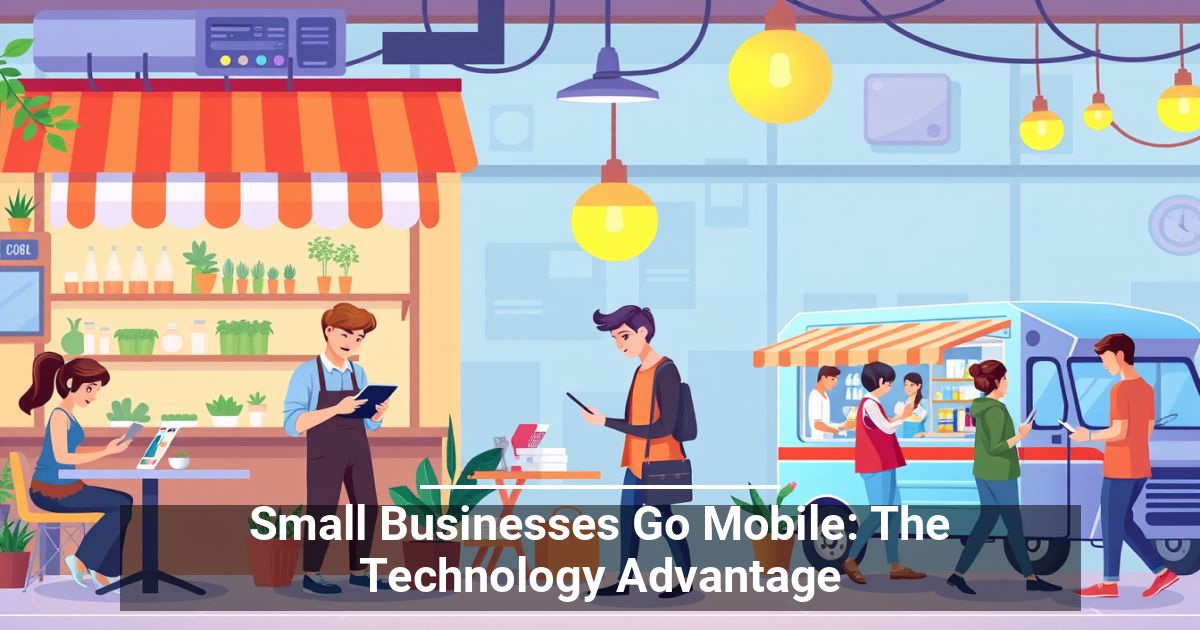
 What if your employees could take essential digital tools wherever they go? Today's smartphones and tablets can do far more than make calls or send messages. With the right apps and security controls, they can support daily operations and help employees stay productive beyond the traditional office.
What Is Mobile Technology for Small Businesses?
Small business mobile technology refers to devices and digital systems that enable employees to perform business tasks away from a traditional workstation. It combines portable hardware with wireless connectivity, cloud services, and applications that support on-the-go work.
When you're running a small business, such flexibility makes a real difference. Common examples of mobile technology include:
- Smartphones and tablets
- Business productivity apps
- Mobile point-of-sale systems
- Cloud-based software
- Wearable business devices
- Wireless communication tools
Put Your Mobile Devices to Work
The key is to match each device with the right business task. When paired with the right software, you can use mobile technology to reap these worthwhile advantages.
Keep Employees Connected
Mobile devices help teams communicate while they're away from their desks. Tablets can support video meetings and collaboration, while handheld devices can keep field workers connected to the office. This becomes especially useful when you manage a hybrid or remote workforce.
Gain Real-Time Data Access
What happens when an employee needs customer information while working on site? A tablet or handheld device can provide secure access to cloud-based systems without requiring a trip back to the office.
Small businesses can use this capability for the following:
- Inventory management
- Inspections
- Service calls
- Order processing
- Data collection
Make Customer Service More Convenient
Staff equipped with the right technology investment can access relevant information or process transactions without sending customers elsewhere. For retailers and service businesses, mobile point-of-sale devices allow employees to accept payments away from a traditional checkout counter.
Bring Artificial Intelligence to the Field
AI doesn't have to stay on a desktop. Small businesses can use AI-enabled mobile applications to help employees handle tasks while they're on the move. A salesperson might use an AI assistant to summarize meeting notes, while a field technician could use an AI-powered app to analyze information and support troubleshooting.
Don't Forget Mobile Security
Mobile technology adoption also creates more endpoints for your small business to protect. A lost smartphone or a compromised application could expose company information if you don't implement appropriate safeguards.
Consider implementing the following:
- Strong authentication: Require strong passwords and, where possible, multi-factor authentication.
- Device management: Use mobile device management (MDM) to enforce security policies on company-owned devices.
- Encryption: Protect sensitive information stored on devices and transmitted between systems.
- Remote wiping: Make it possible to erase company data from a lost or stolen device.
Mobile Devices for Small Business Innovation
Small business mobile technology doesn't have to mean an expensive digital transformation. Start with a practical question: Where does your team lose time because employees can't access what they need?
Identify that gap first, then choose mobile technology that closes it. That's how a smartphone or tablet becomes more than just another piece of hardware.